Jade in Chinese Culture: The Stone of Heaven and Its Ancient Power
How a single green stone came to outrank gold in the world's oldest continuous civilisation
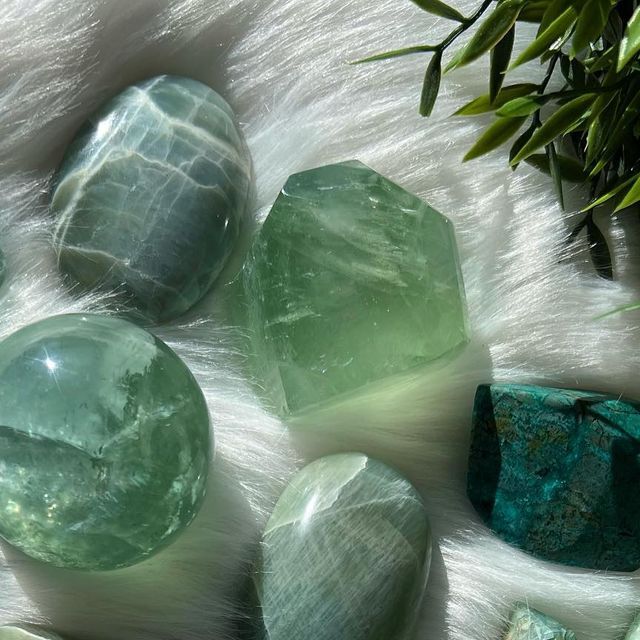
Gold can be measured. Diamonds can be priced by the carat. But for over 7,000 years, the Chinese have reserved their deepest reverence for a stone that resists such simple arithmetic: jade. Long before the Silk Road carried silk westward, it carried something far more precious to the people who made it — the belief that jade was not merely beautiful, but alive with virtue. To understand jade in China is to understand a civilisation's idea of what a person, and a soul, should aspire to be.
At Yumiere, we work with jade because its story has never really ended. The same stone that adorned Neolithic ritual objects still sits on wrists and around necks today, carrying forward a language of protection, virtue, and quiet power that spans millennia.
A 7,000-Year History: Nephrite, Jadeite, and the Birth of a Civilisation
What the West calls "jade" actually refers to two distinct minerals: nephrite and jadeite. Nephrite is the elder of the two — softer, more fibrous, and the stone used by Neolithic cultures along the Yellow and Yangtze Rivers as early as 5000 BCE. Archaeologists have unearthed nephrite discs, blades, and ceremonial axes from the Hongshan and Liangzhu cultures, proving that long before bronze or writing, the people of ancient China were already carving sacred meaning into stone.
Jadeite, the harder and more vividly coloured variety prized today for its emerald-green translucence, arrived much later — imported from Burma (modern Myanmar) starting in the 18th century. It quickly eclipsed nephrite in the imperial court's affections, and the brilliant "Imperial Green" jadeite became the most coveted gemstone in the empire, often valued above gold itself.
- Nephrite (软玉): The ancient stone of ritual and burial, found in shades of white, green, and yellow. Associated with the earliest dynasties and ancestor worship.
- Jadeite (硬玉): The later, harder import from Burma, capable of the vivid emerald tones that define "Imperial Jade" — the rarest and most expensive jade in the world.
Why Jade Is Called the "Stone of Heaven" (天石)
In Chinese philosophy, jade occupies a category of its own. It is called yu (玉), a word so revered that it appears in the names of emperors, in classical poetry, and in the character for "beautiful" itself. Confucius is said to have likened the gentleman's virtue to jade, and from this comparison emerged the Five Virtues of jade — qualities every cultivated person was meant to embody:
Benevolence (仁)
Jade's gentle lustre, warm to the touch, was seen as a reflection of a compassionate heart.
Wisdom (智)
Its clarity and the way light passes through it were likened to a mind unclouded by deceit.
Integrity (義)
Jade's hardness — difficult to scratch, slow to wear — mirrored unbending moral character.
Courage & Modesty (勇 / 潔)
Jade does not shatter under pressure, and its surface never appears arrogant or showy.
This is why jade earned the name tian shi, the "stone of heaven" — a material believed to carry cosmic order (Tao) within its very structure, bridging the human and the divine.
Imperial Jade: Emperors, Burial Suits, and Seals of Power
No dynasty understood jade's power more completely than the imperial court. Emperors commissioned jade seals to authenticate their decrees — the most famous being the Heirloom Seal of the Realm, said to be carved from the legendary He Shi Bi jade and passed between dynasties as a literal symbol of the Mandate of Heaven.
Perhaps the most striking testament to jade's spiritual authority is the jade burial suit. Han dynasty royalty were sewn into full-body armour made of thousands of small jade plaques, stitched together with gold, silver, or silk thread depending on rank. The belief was absolute: jade prevented the body from decaying and protected the soul on its journey into the afterlife. Princes and princesses were buried this way, their entire forms encased in stone meant to outlast time itself.
Jade also adorned the court in life — hairpins, belt hooks, ceremonial tablets called guicarried by officials, and the famous bi discs used in rites connecting the emperor, as the Son of Heaven, to the sky itself.
Jade in Feng Shui and Everyday Chinese Life
You do not need to be royalty to carry jade's protection. Long after the last emperor, jade remains woven into the rhythms of ordinary Chinese life — worn, gifted, and displayed with quiet intention.
Protection & Guardianship
There is a widespread belief that jade absorbs misfortune meant for its wearer — even cracking or breaking in place of a person who would otherwise have suffered harm. Jade bangles are traditionally given to children and worn continuously for exactly this reason.
Longevity & Prosperity
In Feng Shui, jade is placed in homes and worn on the body to invite stable, long-lasting good fortune. Unlike stones associated with sudden luck, jade's energy is slow, steady, and enduring — wealth and health that accumulate rather than arrive overnight.
Jade pendants carved into specific shapes carry their own symbolism: a jade Buddha for peace, a jade coin for wealth, a jade ruyi sceptre for wishes fulfilled. Gifting jade is itself an act of care — to give someone jade is to wish them a long, protected life.
Jade Colours and Their Meanings
- Green jade: The most prized colour, associated with growth, balance, and the heart. The deepest emerald tones — "Imperial Green" — are reserved for the rarest, most valuable pieces.
- White jade: Linked to purity, clarity, and the moon. Historically favoured for scholarly and ceremonial objects, symbolising an unblemished spirit.
- Lavender jade: A softer, more recently fashionable hue, associated with serenity, spiritual refinement, and feminine grace.
- Red jade: Rare and often associated with iron staining, red jade is tied to vitality, passion, and — as with red agate — good fortune and celebration.
How to Wear Jade Jewellery Today
Wear It Daily, Not Occasionally
Tradition holds that jade's protective quality deepens the longer it stays close to the skin. A jade bracelet or bead is meant to become part of you — not a piece reserved for special occasions, but a quiet companion worn every day.
Let It Be Personal, Not Inherited Cold
Many believe jade absorbs the energy of its first wearer, which is why heirloom jade is treasured but new jade is also considered a fresh, personal talisman — one that grows more attuned to you with time.
Pairing with Other Crystals
Jade's calm, grounded energy pairs beautifully with Green Aventurine for amplified luck and growth, or with Red Agate for a combination of protection and vitality long favoured in Chinese tradition.
If you want to explore the healing and balancing properties of jade in more depth, read our dedicated guide: What Are the Benefits of Jade? Harmony & Abundance Explained.
Frequently Asked Questions
What is the difference between jadeite and nephrite?
Nephrite is the older, softer jade used since Neolithic China; jadeite is the harder, more vividly coloured variety imported from Burma centuries later. Both are called "jade," but jadeite's Imperial Green tones are generally the more valuable of the two.
Why do people say jade "protects" the wearer?
Chinese tradition holds that jade absorbs negative energy or misfortune on behalf of its wearer — some even say a jade bangle will crack in place of an injury. Whether taken literally or as symbolic comfort, the belief has kept jade close to generations of wrists and necks.
Final Thoughts
Jade has outlasted dynasties, empires, and the rise and fall of countless trends, because it was never just decoration. It was a moral compass carved in stone — a daily reminder of the virtues a person could carry into the world: benevolence, wisdom, integrity, courage, and quiet modesty.
To wear jade today is to wear a small piece of that 7,000-year conversation between heaven and earth — a stone that has always asked its wearer not just to look beautiful, but to live well.
Not Sure Which Intention Is Right For You?
Take our quick crystal quiz to discover which crystals and intentions align best with your current energy needs and life circumstances.